BENEFICIARIES WHO ARE DISABLED OR STRUGGLING WITH ADDICTION ISSUES…

present unique challenges for those making Wills.  Typically, will-makers provide outright gifts to beneficiaries except where the beneficiaries are under age in which case the will-maker creates a trust in the Will directing the executor/trustee to hold the gift (usually liquid investments) in trust for the under-aged beneficiary under that under-aged beneficiary reaches a certain age with the executor/trustee having the right to access the investment for the purposes of providing for the care, maintenance, education and benefit of that under-aged beneficiary. 

However, what ought a will-maker do if the intended beneficiary is struggling with addiction or longstanding mental illness issues.  In such cases, a lump sum gift received at any age may be squandered by such a beneficiary or the beneficiary may become a target of unscrupulous individuals.  Another consideration is that some beneficiaries may be in receipt of both Provincial and Federal disability benefits and a lump sum inheritance may compromise the ongoing receipt of such benefits. 

A trust known as a Henson trust set up in a will addresses both the concerns of a beneficiary squandering a lump sum inheritance or having such an inheritance negatively impact that beneficiary’s disability payments.  It is highly recommended that a will-maker seek out a lawyer familiar with Henson trusts when considering whether to include a Henson Trust in his or her will for a certain beneficiary. 

An additional consideration when considering the needs of a disabled beneficiary is who will manage the trust for the disabled beneficiary.  All too often, there is conflict between the trustee and the disabled beneficiary and the trustee can be worn down by the continual demands of a beneficiary struggling with mental illness or addiction issues.  In such cases, it is advisable that a professional trust company be appointed to administer the trust.  Sometimes, will-makers will appoint both a trust company and a family member to manage a trust for a disabled beneficiary. 

In either case, it’s often inappropriate to ask a family member or sibling to take on the responsibility of managing a trust for a child with mental illness or addiction issues whether or not that child accepts his illness and is working towards health and recovery, or is still active in his illness or addiction. It’s often best for both the child as well as any siblings, to appoint an independent third party, such as a professional Trust Company, to take on the role of managing the trust.

If you or a loved one has a spouse or child struggling with mental illness or addiction and wishes to make or update a will, consult Vancouver/Burnaby wills & estates lawyer Andrew Rebane at Resolutions Law Corporation, located near East Vancouver and in Burnaby, British Columbia, Email: andrew@resolutionslawcorp.com or 778-372


HOW OFTEN SHOULD YOU REVIEW YOUR WILL….

Before even asking this question, it is important to ensure that you also have in place a Power of Attorney and a Representation Agreement for personal healthcare matters as these two documents will ensure that someone can make legal, financial, and personal care decisions for you in the event you are temporarily or permanently incapacitated by reason of accident or illness. 

When considering what to put into your Will, Power of Attorney, and Representation Agreement, Andrew Rebane will customize each of these documents to develop a comprehensive and workable estate plan for you.   

All three planning documents should be reviewed regularly to ensure that they continue to reflect your family and financial situation. The following are some life events that may trigger the need to review your plan with Andrew Rebane:

1. Marriage

Upon marrying for a second time, your new spouse will be competing with your children for a share of your estate.  You need to consider who among your new spouse and children do you wish to inherit your estate and how much.  Also, your stepchildren no matter how much you love them will not inherit anything from you unless you do a new Will naming them as beneficiaries. 

2. Termination of Marital Relationship by reason of Death or Separation

Upon separating from your spouse or death of a spouse, you will usually need to amend your estate plan by removing your spouse as the Executor under your Will, the Attorney under your Power of Attorney, and the Representative under your Representation Agreement governing your personal healthcare. 

3. Substantial Change in Asset Holdings

Whenever you buy or sell real estate or come into a windfall by reason of an investment or inheritance then it is prudent to review your Will particularly as the value of gifts made under the terms of the Will may be impacted greatly by such events in your life.  Acquisition of real estate outside of British Columbia ought to trigger a Will review.  Similarly, if you buy a business or already own a business and sell a portion of it to another so as to take on a fellow shareholder/partner, your Will ought to be reviewed.

4. Birth of a Child

When you add a child to your life whether through natural birth, adoption or a step-child through marriage, you need to review your Will and update it to include the nomination of a guardian for that biological or adopted child.  You may also want to ensure that any bequests to a child are gifted through a testamentary trust so as to ensure the child does not come into a large sum of money at the age of 19.   

5. Change in circumstances of your choice of executor, attorney or representative

The personal or financial health of your chosen executors, guardians, attorneys and representatives may change over time and such changes may make your choice of executors and guardians no longer appropriate.  Bankruptcy may prevent an attorney from acting; alcoholism & the accompanying financial irresponsibility may make your good friend no longer appropriate choice as executor and declining health of a representative may make him or her no longer able to make decisions about your personal healthcare. 

6. Unexpected illness or disability of a beneficiary

In the event one of your children or grandchildren loses capacity or develops an addiction issue, your Will ought to be reviewed because such a beneficiary may lose entitlement to a government income supplement based on needs or may squander the inheritance. 

7. Medical Diagnosis of Impending Incapacity

If a doctor has diagnosed you with a medical condition that will render you mentally incapacitated, it is important that you review your Will, Power of Attorney and Representation Agreement for personal healthcare as you may have had these documents originally prepared with the idea that these documents would not come into use until many years into the future. 

8. Death of a Spouse or Beneficiary

Upon the death of a spouse, child, grandchild or other beneficiary, a review of your Will is in order as you want to make sure that your Will distributes the assets in accordance with your wishes as you may wish a deceased child’s children to inherit a portion of your estate OR you may prefer that your other children share that portion of your estate.

9. Moving to Another Province or Country

Upon moving to a new province or out of country, it is critical for your Will, Power of Attorney, and Representation Agreement to be reviewed by a lawyer in the jurisdiction to which you are moving because every province and country has its own set of laws governing the preparation of Wills, Powers of Attorneys, and documents governing healthcare in the event of capacity.  Similarly, each jurisdiction has its own statutory regime governing the distribution of estates upon death and applicable taxes upon death.

10. Passage of Time

As the list above is by no means exhaustive and you do not see any event in your life falling within this list, you should be reviewing your Will, Power of Attorney, and Representation Agreement for personal healthcare every 3-5 years. 

If you or a loved one wishes to review his or her Will, Power of Attorney or Representation Agreement for personal healthcare or worst yet does not have any of these estate planning documents in place consult Vancouver/Burnaby wills & estates lawyer Andrew Rebane at Resolutions Law Corporation, located near East Vancouver and in Burnaby, British Columbia, Email: andrew@resolutionslawcorp.com or 778-372-7107

DISINHERITED?  YOU MAY BE IN LUCK OR NOT…. 

Were you expecting an inheritance under a loved one’s Will and found out after death that you were not a named beneficiary in the deceased loved one’s Will OR received less than what you were expecting under that Will? 

In such cases, you can challenge the Will in one of two ways:

Section 60 of the Wills, Estates & Succession Act (“WESA”)

If you are related to the deceased by reason of being the deceased’s spouse or child, you can apply under S.60 of WESA to the courts for an order that provision be made out of the deceased’s estate that is just and equitable in the circumstances for your benefit.  That being said, you must be either the deceased’s spouse or child to seek funds from the estate under WESA.  Grandchildren, nieces, nephews and other relations have no standing to apply for a share of the estate under WESA. 

Undue Influence

Where you suspect a loved one was under undue influence to make a Will that excluded you, you can apply to court to challenge the validity of the Will and in the event that such challenge is successful then the Will shall be set aside and if an earlier Will exists then its provisions will govern the distribution of the deceased’s assets or if no such Will exists then the deceased will be found to have died without an Will and the estate will be distributed in accordance with the rules as set out in WESA. 

In order to convince a Court to make a finding that the deceased made a Will under undue influence, the onus will be on you to establish the Will was made under suspicious circumstances where the Will is properly executed.  A court will look to the following factors to determine if suspicious circumstances existed at the time of the signing of the Will:

  1. Were one or more of the named beneficiaries in a position to exercise undue influence over the will-maker such as providing care-giving or running daily chores for the will-maker;
  2. Were one or more of the beneficiaries facilitating the making of the Will – such as did the beneficiaries drive the will maker to the appointment or discuss the matter with the drafting Notary or Lawyer;
  3. Timing of the will maker’s decision to make a will or new will in relation to the physical or mental deterioration of the will-maker;
  4. Were one or more of the named beneficiaries a relatively recent acquaintance of the will-maker or re-entered the will-maker’s life after a long absence;
  5. Changes to the Will made towards the end of the will-maker’s life or during periods of ill-health; and
  6. The will-maker’s isolation from family members and/or friends.

This list is by no means exhaustive as other events surrounding the making of a Will may constitute suspicious circumstances.  Once you have established the existence of suspicious circumstances surrounding the making of the Will, the onus falls upon those attempting to uphold the Will to prove the will-maker had capacity when signing the Will. 

If you or a loved one has been excluded from an estate of a relative or close friend by a will made in what you feel are suspicious circumstances, timely legal advice and representation can be had by contacting Vancouver/Burnaby inheritance and estate litigation law lawyer Andrew Rebane at Resolutions Law Corporation, andrew@resolutionslawcorp.com or 778-372-7107

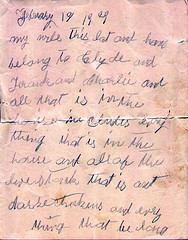
WILLS – unsigned, unwitnessed, no problem?

WILLS MAY NO LONGER NEED TO BE SIGNED OR WITNESSED TO BE VALID IN BRITISH COLUMBIA Under the Wills Act, a Will was only valid if it was (a)in writing; (b)at its end is signed by the will-maker or by some other person in his presence and by his direction; (c)the will-maker makes or acknowledges the signature in the presence of 2 or more witnesses present at the same time; and (d)2 or more of these witnesses in the presence of the testator. A Will which did not meet the above-mentioned criteria was invalid and the courts of British Columbia had no power to declare such testamentary documents enforceable. In other words, British Columbia was a “strict compliance” jurisdiction when it came to the issue of determining a Will’s validity and sometimes, a will-maker’s intention were defeated on mere technicalities and not on an analysis of what the will-maker actually wanted to happen with his estate upon death. However, in 2013, the Wills Act was replaced by the Wills Estate Succession Act (“WESA”) that gave the courts of British Columbia the power to rectify a Will that didn’t meet the criteria of being in writing, signed by the will-maker in the presence of two witnesses. Indeed, S.58 of WESA, which empowers courts to declare un-signed or un-witnessed Wills to be valid, does not impose a minimum level of execution or other formality before a court can declare a Will to be valid. In broad terms, the applicable test under s.58 of WESA has two main parts: (1)Whether the record, document, or writing is “authentic”; and (2)Whether the record, document or writing represents the deliberate or fixed and final intention of the deceased person. Whether a court will declare a document left by a loved one a valid Will even though it does not meet the usual requirements of being signed or witnessed is intensely fact specific and it is critical to seek legal advice quickly. If you find such a testamentary document in your loved one’s belongings after death consult Vancouver/Burnaby wills & estates lawyer Andrew Rebane at Resolutions Law Corporation, andrew@resolutionslawcorp.com or 778-372-7107