
Challenging a Prenuptial Agreement

A prenuptial agreement, also known as a marriage agreement or a cohabitation agreement, is an agreement that you enter in before you marry your spouse or before cohabitation with a significant other.

This agreement covers things like property, debt, spousal and child support, and is a guideline as to how you will split your assets and how much you owe the other person (or vice versa) should you and your spouse separate in the future. With a prenuptial agreement, you can prevent further potential conflict during the already emotionally charged time of separation.

But what if, when the time comes, you do not agree with the prenuptial agreement that has already been set? Is there anything you can do about it?

The short answer is yes.

It is definitely possible to challenge a prenuptial agreement in BC. You will first have to file it with the Court. Under section 93 of the Family Law Act, the Court may either set aside a part or all of the agreement and replace it with a new order, provided that one or more of the following circumstances existed when you and your spouse entered into the agreement:

  1. a spouse failed to disclose significant property or debts, or other information relevant to the negotiation of the agreement;
  2. a spouse took improper advantage of the other spouse’s vulnerability, including the other spouse’s ignorance, need or distress;
  3. a spouse did not understand the nature or consequences of the agreement;
  4. other circumstances that would, under the common law, cause all or part of a contract to be voidable.

However, the Court may also decline to replace the prenuptial agreement with an order that is substantially different from the terms of the agreement. It all depends on your specific circumstances under which you and your spouse signed the prenuptial agreement.

If you or a loved one are seeking to challenge a prenuptial or cohabitation agreement, consult Vancouver and Burnaby Family Law Lawyer Andrew Rebane at Resolutions Law Corporation, Burnaby, British Columbia at andrew@resolutionslawcorp.com or 778-372-7107

Escaping an Abusive Spouse

If you find yourself in a situation where you feel the need to escape from an abusive spouse, you may be wondering what steps you’ll need to take. How can you protect yourself? Your children?

There are a few possible paths you can take depending on your situation.

Report to the Police

If you think your spouse poses an immediate danger to yourself or your children, call the police right away. The police will take certain steps to ensure that you and others around you stay safe, including recommending criminal charges, a Peace Bond, or that you seek a Protection Order. The police may also have your spouse ordered to pay a fine or be placed on probation.

 Another thing the police can do to ensure your safety is to connect you to community services that can provide assistance. For instance, there are services that may be able to help you find temporary emergency shelter while you sort out a safe accommodation for yourself and your children.


Seek a Peace Bond

You can seek a Peace Bond under the Criminal Code if you are looking to get protection against an individual. Under a Peace Bond, your spouse will have to obey certain conditions (for example, not contacting you for a certain period of time). If they obey the conditions of the Peace Bond, they will not have a criminal record. However, if they do not obey the conditions, they may be sent to trial along with an additional charge of breaching the Peace Bond.


Apply for a Protection Order

You can apply for a Protection Order under the BC Family Law Act. A Protection Order lists a number of conditions that your spouse must obey, and can also require the police to remove your spouse from the home, escort them while they remove their personal property from the home, or seize their weapons. A Protection Order can also require your spouse to report to the court.


Apply for a Conduct Order

If you feel that your situation does not need to escalate to the point of requiring a Peace Bond or a Protection Order, you can apply for a Conduct Order, made under the Family Law Act. A Conduct Order is similar to a Protection Order in that it sets out rules and conditions for your spouse to follow, but where it differs is in the consequences of breaching the order. Unlike a Protection Order, if your spouse breaks the terms of a Conduct Order, you cannot immediately rely on the police to enforce it. Instead, you will have to apply to the court again to obtain another order.


If you are in an abusive relationship and are seeking legal advice or assistance in keeping yourself and your loved ones safe, consult Vancouver and Burnaby Family Law lawyer Andrew Rebane at Resolutions Law Corporation, Burnaby British Columbia at andrew@resolutionslawcorp.com or 778-372-7170.

Who Keeps the Ring After Separation?

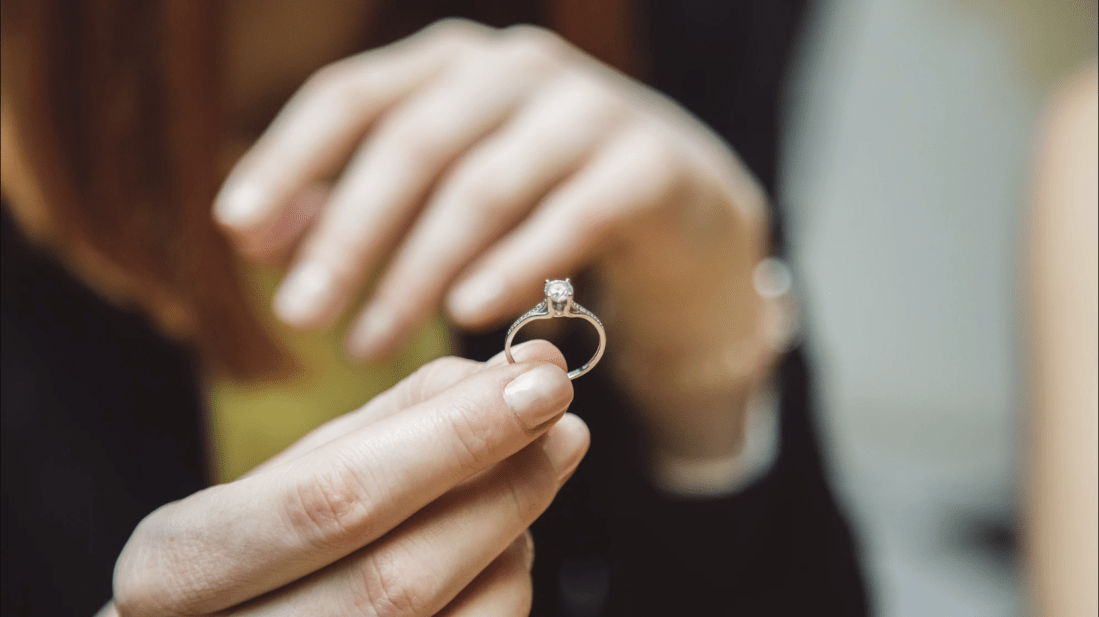
Separation from your spouse or fiancé(e) can be a very testy time in your life and you may have many questions during this time, including: who keeps the ring?

In British Columbia, according to the BC Family Law Act, the gift of an engagement ring is considered a conditional gift. This means that it is gifted with the expectation that you and your fiancé(e) will marry each other at some point. 

Before Marriage

However, if you separate before you end up getting married to each other, you fail to meet the condition, and the ring would have to be returned to the person who gifted it.

After Marriage

If you are already married when you separate, then the recipient of the ring would get to keep it. This is because having married, you will have met the condition associated with the gift of the engagement ring.

Exceptions?

There may be exceptions, depending on your unique situation. In the past, there has been a case in BC where the recipient of the engagement ring was entitled to keep it despite the fact that the couple hadn’t been married yet, because she maintained that her then fiancé had given it to her as an absolute gift.

Another exception would be if the recipient had paid for their own engagement ring. In both of those cases, the recipient keeps the ring even though generally they would have to give it back as it is normally a conditional gift according to the BC Family Law Act.

As you may see, even the simple question of “Who keeps the ring?” can elicit quite a complicated answer.

If you or a loved one have separated from a relationship and require assistance in dividing your assets, consult Vancouver and Burnaby Family Law Lawyer Andrew Rebane at Resolutions Law Corporation, Burnaby, British Columbia at andrew@resolutionslawcorp.com or 778-372-7107