So You’ve Been Appointed an Executor. Now What?

A close friend or loved one has died and you are aware that you have been named executor in his or her Will.

What should you do next?

Step 1

Locate the Will. In many cases, the deceased will have told the executor where the Will is located but there are times where the deceased has not informed the executor of the location of the Will. Where the Will cannot be easily located, the executor will have to submit a form called an Application for Search of Wills Notice with the Wills Registry administered by the Vital Statistics Agency of British Columbia, which provided if a legal professional submitted a Wills Notice, will indicate the last known location of the Will and the name of the legal professional who prepared the Will. Sometimes, the original of the Will may not be located but a copy of the Will may be located and that is usually sufficient to carry out the last wishes of the deceased.

Step 2

Once the Will is located then it is always a good idea to review the terms of the Will with a lawyer specializing in the area of Wills and Estates, followed by a meeting with a Certified Public Accountant to understand what steps need to be taken so as to ensure the deceased and the estate remain in compliance with the Income Tax Act

Step 3

Arrange for the funeral of the deceased. In many cases, you can take the bills from the funeral home to the financial institution and the financial institution will release funds from the deceased’s account to pay the funeral bills in advance of the grant of probate.

Step 4

Cancel all credit cards and subscriptions.

Step 5

Apply for Canada Pension Plan Death Benefits as there is a strict time limit for applying for such benefits and review any other employment relation pension plans that the deceased received during his/her lifetime to determine if any death benefits are available.

Step 6

Compile a list of assets and debts in the sole name of the Deceased.

Step 7

Obtain death certificates to facilitate the transfer of assets owned by the deceased jointly with others into the name of the survivor(s). Such assets can include joint bank accounts and real estates. Also, submit the death certificate to those financial institutions where the deceased had RRSPs, RRIFs, TFSAs or life insurance policies with named beneficiaries.

Step 8

With the assistance of a Wills & Estates lawyer, apply for a grant of probate of the Will which is the legal process through which the validity of the Will is recognized by an order of the Supreme Court of British Columbia. For more information on what probate is, please see our articled called WHAT IS PROBATE?

Step 9

Once probate is granted, take the court order – grant of probate to all financial institutions where the deceased had accounts and have such accounts transferred into your name, Executor of the Estate of the “Name of the Deceased”. In the event that deceased owned real estate in British Columbia, submit the court order – grant of probate to the Land Title Survey Authority to have any parcels of real estate in the deceased’s sole name registered into your name, Executor of the Estate of the “Name of the Deceased”.

Step 10

Advertise for Creditors of the Deceased, examine all creditor’s claims, and pay all proven debts of the Deceased.

Step 11

Collect all amounts due and owing to the Deceased.

Step 12

With the assistance of a Certified Public Accountant, arrange for filing of all requisite tax returns and obtain from Canada Revenue Agency, the tax clearance certificate which confirms that all taxes of the Deceased and the Estate have been paid. Failure to obtain the tax clearance certificate prior to distributing the estate to beneficiaries could result in you being personally liable for unpaid taxes of the Deceased and the Estate.

Step 13

Prepare an accounting of monies transferred into your name in your capacity as executor and funds paid out to cover estate expenses. Prepare a further accounting of the funds remaining after payment of estate expenses to be distributed in accordance with the terms of the Will.

Step 14

After waiting a period of 180 days from the grant of probate so as to ensure no challenges to the Will by a spouse or children of the Deceased, obtain the written consent of the beneficiaries to the proposed distribution of the Deceased’s estate and a signed release from each beneficiary releasing you from any claims as the executor of the estate and once having obtained the written consents and releases from all beneficiaries, then distribute the funds.

Depending on the biographical details of the Deceased, the size of the Deceased’s estate and the nature of assets held by the Estate, the steps outlined above may be incomplete or slightly out of sequence. It is important to consult the advice of a wills and estates lawyer to determine the correct steps to take when administering an estate. If you or a loved one has been appointed an executor under the terms of a Will, consult Vancouver and Burnaby Wills, Estates, and Probates lawyer Andrew Rebane at Resolutions Law Corporation, Burnaby British Columbia at andrew@resolutionslawcorp.com or 778-372-7107.

Can a Suicide Note also Operate as a Will?

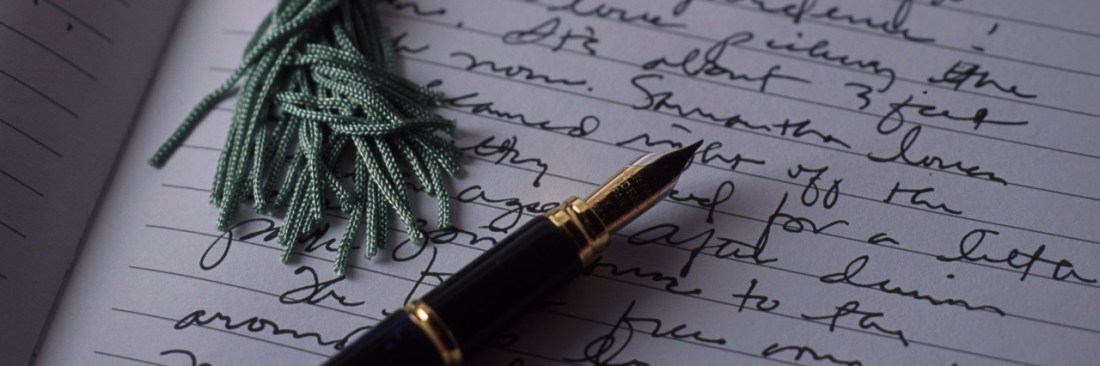
Can a written note authored by someone prior to committing suicide also serve as the person’s Last Will? This question was addressed in a recent Supreme Court decision in which the deceased’s handwritten suicide note was discovered in her vehicle after her body was found washed up on the banks of the Fraser River.

The handwritten note referred to it being a Will, asking the deceased’s wishes be respected and then directing that her contents and a specific bank account be given to her common law husband, that a brother receive her RRSP, and her other siblings “get nothing”.

S.37 of the Wills, Estates and Succession Act (“WESA”) sets out the formal requirements for the validity of a Will:

37 (1) To be valid, a will must be

(a) in writing,
(b) signed at its end by the will-maker, or the signature at the end must be acknowledged by the will-maker as his or hers, in the presence of 2 or more witnesses present at the same time, and
(c) signed by 2 or more of the witnesses in the presence of the will-maker.

       (2) A will that does not comply with subsection (1) is invalid unless

(a) the court orders it to be effective as a will under section 58 [court order curing deficiencies],
(b) it is a will recognized as valid under section 80 [validity of wills made in accordance with other laws], or
(c) it is valid under another provision of this Act.

S.58 of WESA empowers the court to order that a document that does not strictly conform with S.37 has the same legal effect as a Will.

58 (1) In this section, “record” includes data that

                (a) is recorded or stored electronically,
                (b) can be read by a person, and
                (c) is capable of reproduction in a visible form.

(2) On application, the court may make an order under subsection (3) if the court determines that a record, document or writing or marking on a will or document represents

(a) the testamentary intentions of a deceased person,
(b) the intention of a deceased person to revoke, alter or revive a will or testamentary disposition of the deceased person, or
(c) the intention of a deceased person to revoke, alter or revive a testamentary disposition contained in a document other than a will.

(3) Even though the making, revocation, alteration or revival of a will does not comply with this Act, the court may, as the circumstances require, order that a record or document or writing or marking on a will or document be fully effective as though it had been made

        (a) as the will or part of the will of the deceased person,
        (b) as a revocation, alteration or revival of a will of the deceased person, or
        (c) as the testamentary intention of the deceased person.

(4) If an alteration to a will makes a word or provision illegible and the court is satisfied that the alteration was not made in accordance with this Act, the court may reinstate the original word or provision if there is evidence to establish what the original word or provision was.

When considering, pursuant to S.58 of WESA whether a document that does not confirm with S.37 of WESA is legally enforceable as a Will, the Court must be satisfied that the document is authentic and secondly that the document reflects the deceased’s deliberate and final expression as to disposal of his/her property.

In the case at hand, the Court readily found that the note was authentic as it was in the handwriting of the Deceased and then proceeded to consider whether the note represented the fixed and final intention of the deceased as to the disposal of the property upon death. The Court found that the note did represent the fixed and final intention of the deceased for the following reasons:

(a) The deceased refers to the note as being her Will;
(b) The deceased asks that her common law and sibling respect her wishes, leading the court to find this as a direction for them to act on his behalf;
(c) The note is in the deceased’s handwriting and signed by her, indicating her approval of the content of the note;
(d) The note was made in contemplation of death;
(e) The note was found near where the deceased’s body was found indicating an intention that the note be found;
(f) The note makes bequests of significant assets of the deceased’s estate;
(g) The note provides identifying information about the deceased’s assets; and
(h) The note’s language conveys finality.

As a result of the afore-going reasons, the Court found the note to have the legal effect as being the Will of the deceased.

While the circumstances of this case are particularly tragic, people do often leave documents that evidence what they desire to occur with their property upon death that do not conform with S.37 of WESA and in these cases, it is strongly recommended to obtain legal advice in a timely manner to ensure that the deceased’s intentions are honoured.

If you discover such a note in your loved one’s possessions after death, timely legal advice and representation can be had by contacting Vancouver/Burnaby probate, inheritance and estate litigation law lawyer Andrew Rebane at Resolutions Law Corporation, andrew@resolutionslawcorp.com or 778-372-7107

Can My Spouse Challenge My Decision to Exclude Him or Her from My Will?

In a prior post, it was discussed what may arise from a decision to exclude your children from your Will and so today’s topic will cover: What may arise from your decision to exclude your spouse?

Section 60 of the Wills Estates Succession Act (“WESA”) empowers a court to vary the terms of a Will that does not make adequate provision for the Will-maker’s spouse (including common law spouse) where such spouse makes an application to the court for a variation of the Will-maker’s Will. To quote:

S.60. Despite any law or enactment to the contrary, if a Will-maker dies leaving a Will that does not, in the court’s opinion, make adequate provision for the proper maintenance and support of the Will-maker’s spouse or children, the court may, in a proceeding by or on behalf of the spouse or children, order that the provision that it thinks adequate, just and equitable in the circumstances be made out of the Will-maker’s estate for the spouse or children.

The words “adequate”, “just” and “equitable” have been judicially considered by the Courts and have determined that the Will-maker’s Will must satisfy the Will-maker’s legal and moral obligations to the surviving spouse.

When determining what the Will-maker’s legal obligations are to the surviving spouse, the Courts will look to what the surviving spouse would have received if the parties had separated and then look to what the surviving spouse’s entitlement would be under the mean. BC courts have measured “adequate, just and equitable” by comparing what the surviving spouse received under the Will with what they would have been entitled to under the Family Law Act of British Columbia. This means in cases of long term marriages where assets were intermingled, the surviving spouse’s claim to a share of the Will-maker’s estate is stronger than those of a spouse who was married to the Will-maker for a short period of time and whose finances were separate from the Will-maker.

When determining what the Will-maker’s moral obligations are to the surviving spouse, the Court will consider whether the provisions of the Will-maker’s Will are within society’s reasonable expectations of what a judicious person would do in the circumstances by reference to contemporary community standards.

In light of the afore-going, you would think it would take a fairly unique set of facts for a Court to uphold a Will-maker’s decision to entirely exclude a long term spouse from being a beneficiary under the terms of the Will but the Courts have in fact done so where the parties, in a second marriage, maintained separate finances and the Will-maker make provision for the surviving spouse to live in the home for as long as the surviving spouse wanted.

Ultimately, the question of whether a Court will uphold the Will-maker’s decision to exclude or limit a spouse’s entitlement to the estate will depend on the specific facts surrounding the marriage of the parties and the provisions of the Will-maker’s Will.

If you or a loved one has been excluded from an estate of a spouse or parent, timely legal advice and representation can be had by contacting Vancouver/Burnaby inheritance and estate litigation law lawyer Andrew Rebane at Resolutions Law Corporation, andrew@resolutionslawcorp.com or 778-372-7107.

What if I Don’t Get Along with My Co-Executor?

As an experienced lawyer who has drafted countless Wills in my career, it is not uncommon for my clients to name their children as joint executors of their estate in their Will. Appointment of joint executors requires these individuals to make all decisions affecting the Estate together by consent. This requirement that all executors act unanimously may prove problematic where the children maintain a veneer of a loving relationship for the sake of their parents which inevitably breaks down upon the passing of their parents. The requirement of unanimity between joint executors can create undue delay and additional financial and legal costs where the joint executors can’t agree on matters such as selling a house or how to carry out the terms of a Will.

What can one do in a situation where one cannot act in co-operation with a co-executor?

An option is to apply to court to “pass over” or “remove” the other co-executor with whom you cannot co-operate. Section 158 of the Wills Estates Succession Act (“WESA”) empowers a court, upon application from someone who has an interest in the estate (executor or beneficiary), to remove someone who is executor and has begun the process of the administration of the estate or to bypass a named executor prior to that executor handling the estate. In order for the court to make an order removing or bypassing an executor, the Court must be convinced the executor should not continue or become the executor for any number of the following reasons:

(a) refuses to accept the office of or to act as personal representative
without renouncing the office,
(b) is incapable of managing his or her own affairs,
(c) purports to resign from the office of personal representative,
(d) being a corporation, is dissolved or is in liquidation other than
a voluntary dissolution or liquidation for the purpose of amalgamation
or reorganization
(e) has been convicted of an offence involving dishonesty
(e.1) is an undischarged bankrupt,
(f) is

(i) unable to make the decisions necessary to discharge the office of personal representative,
(ii) not responsive, or
(iii) otherwise unwilling or unable to or unreasonably refuses to carry out the duties of a personal representative, to an extent that the conduct of the personal representative hampers the efficient administration of the estate, or

(g) a person granted power over financial affairs under the Patients Property Act.

Section 158 of WESA may be relied upon where the executor to be removed has received a gift from the deceased under suspicious circumstances and is refusing to return it to the estate or where a person named as an executor is either by intent or omission failing to take the necessary steps to deal with the estate.

Mere personality clashes between executors or between executor and beneficiary is not a sufficient reason in and of itself to have an executor removed or bypassed. Further, the Will-maker’s decision to appoint an executor is not to be lightly interfered with by the Court but rather what is in the best interests of the estate and its beneficiaries as a whole. When determining whether an executor is to be removed or bypassed, the Court will consider the following factors:

  1. Whether the executor has endangered the estate’s property or will likely endanger the estate’s property;
  2. Whether the executor has a history of dishonesty in business or personal dealings;
  3. Whether the Executory has the mental capacity to execute the duties of an executor; and
  4. Whether there is an actual or potential conflict of interest between the interest of the executor and the executor’s interest and the estate’s interest.

Contested estate matters involve relatively complicated legal issues that are further complicated by a special set of rules that govern how these contested matters are to be resolved and so it is usually not recommended to self-represent in such situations.

If you or a loved one are in need of advice regarding a contested Estate or Probate matter, consult Vancouver and Burnaby Probate lawyer Andrew Rebane at Resolutions Law Corporation, Burnaby, British Columbia at andrew@resolutionslawcorp.com or 778-372-7107.
Does an Adopted Child have Rights to their Birth Parent’s Estate?

According to section 60 of the Wills, Estates and Succession Act (WESA), if a Will-maker dies leaving a Will that does not make adequate provision for the Will-maker’s children, the Will-maker’s children may start a proceeding to vary the Will and have the Court order a more adequate, just, and equitable provision to be made out to them from the Will-maker’s estate.

What if you are an adopted child and you feel that your birth parent’s Will does not make adequate provision for you? Would you be able to vary the Will under section 60 of the WESA?

This question was considered in British Columbia Supreme Court case Boer v Mikaloff, 2017 BCSC 21. The Court ultimately decided that it would not be possible to vary the Will under section 60 of the WESA, considering section 37(1)(c) of the British Columbia Adoption Act, which states that birth parents cease to have any parental rights or obligations with respect to the adopted child. In this particular situation, the Plaintiff was not considered a child of his birth mother.

The Court also considered section 3(2)(a) of the WESA, which states that a child is not entitled to the estate of their pre-adoption parent except through the Will of that pre-adoption parent. This led the Court to the conclusion that a child is essentially in the same position as a non-family member when it comes to their entitlement in their birth parents’ Wills.

Taking both of these sections into account, the Court decided that an adopted child would not be able to take advantage of section 60 of the WESA since the child is technically no longer the child of their birth parent, and retains no rights to their birth parent’s estate other than what is specifically made out to them in their Will.

If you or a loved one are in need of advice regarding Wills and Estates or wish to have assistance in making a Will or challenge a Will, consult Vancouver and Burnaby Wills & Estates lawyer Andrew Rebane at Resolutions Law Corporation, Burnaby, British Columbia at andrew@resolutionslawcorp.com or 778-372-7107.

Leaving Your Children Out of Your Will?

So we’ve talked about what happens if you die without a will—how your estate and assets will be distributed, who would administer your estate, and so on. But what happens if you do make a will, but it does not provide adequately for your children?

According to section 60 of the Wills, Estates and Succession Act (WESA), “despite any law or enactment to the contrary, if a will-maker dies leaving a will that does not, in the court’s opinion, make adequate provision for the proper maintenance and support of the will-maker’s spouse or children, the court may, in a proceeding by or on behalf of the spouse or children, order that the provision that it thinks adequate, just and equitable in the circumstances be made out of the will-maker’s estate for the spouse or children.”

In other words, if you do not provide an adequate part of your estate to your children in your will, they can apply to change the will, and the court could step in and order that an appropriate amount be entrusted to them from your estate.

You may be wondering, what would an appropriate amount be? How does the court define “adequate provision” and how does it determine what is “just and equitable”?

There are in fact no set rules for this, but generally the court will look at societal norms to help them decide whether your will makes adequate provision for your children. These norms may vary depending upon the personal dynamics between you and your spouse/children, what ethnic group you form a part of, among other factors that are very specific to your situation and in light of contemporary community standards.

If you or a loved one are in need of advice regarding Wills and Estates or wish to have assistance in making a Will or challenge a Will, consult Vancouver and Burnaby Wills & Estates lawyer Andrew Rebane at Resolutions Law Corporation, Burnaby, British Columbia at andrew@resolutionslawcorp.com or 778-372-7107.

5 Reasons Why DIY Wills Are a Bad Idea


  1. You won’t realize your mistakes until it’s too late
    Making a do-it-yourself Will means you won’t have a legal professional looking over your Will, checking to see if it is up to standards and that it accurately reflects your wishes.

    If you make a mistake anywhere in your Will or if your Will is inaccurate, incomplete, or imprecise in any way, no one will know until after you die when your Will undergoes the probate process in order to be validated.

    By then, you will have no way to clarify or correct anything in your Will, and this may cause your loved ones a lot of unnecessary grief and hassle and even additional expenses.

  2. You don’t know what you don’t know
    Without a proper legal background, Wills can be complicated. Although you may have an idea of what you want to put in your Will, the truth is you may not know enough about the specific case law and legislation that you need to refer to when making a valid and accurate Will.

  3. You risk neglecting the ‘what if’ scenarios
    Simple Will kits usually do not cover all the different scenarios that could happen. What if your main beneficiary is involved in an accident at the same time as you? What if your Executor is no longer capable of performing the tasks? What if your chosen guardian for your children becomes unavailable? A lawyer can go through the ‘what if’ scenarios with you and ensure that everything is accounted for.

  4. They cannot account for your unique needs
    Every person has their own specific needs and wishes. A generic Will kit can’t fit everyone’s bills perfectly. If you have a specific wish that you want to include in your Will, you may not know exactly how to put it in there such that it will be carried out properly and without complications.

  5. They are an additional hassle that’s not worth the ‘savings’
    Although the cheap costs of a DIY Will may be very tempting, there are many hidden dangers that you may not realize. It will provide you a peace of mind going to a lawyer to have your Will done accurately than to do it yourself and risk making mistakes that will have costly and challenging consequences.

(Click here to find out what happens if you do not have a will)

If you or a loved one is in need of advice regarding Wills or wish to have assistance in making one, consult Vancouver and Burnaby Wills & Estates lawyer Andrew Rebane at Resolutions Law Corporation, Burnaby, British Columbia at andrew@resolutionslawcorp.com or 778-372-7107.



What is a Will? What Happens if You Don’t Have One?

A Will is a legal document that takes effect upon your death. The main purpose of a Will is to say who will get your property (land and personal possessions) when you die. It can appoint a new guardian for your children if you have any, as well as appoint a chosen executor who will ensure your debts are paid, your property is protected, and your wishes are carried out.

No Will, No Way?

Dying without a Will is referred to as “dying intestate”. What happens if you die intestate? Contrary to popular belief, the government is not automatically entitled to your estate in this case.

Without a Will, there is no executor so someone is needed to administer your estate. In British Columbia, the Wills, Estates and Succession Act (WESA) determines how your assets are to be divided and who administers your estate for you.

According to WESA, the distribution rules are as follows:

  • If you have a spouse but no descendants:
    • your estate will be distributed solely to your spouse
  • If you have a spouse and descendants:
    • household furnishings and a “preferential share” of your estate will go to your spouse
  • If you have descendants or relatives but no spouse:
    • Your estate will be distributed to your descendants

(In this context, a “spouse” is defined as someone you are married to, or with whom you have been living in a marriage-like relationship for at least 2 years.)

Without a Will, you lose control over who gets your estate when you die, and you give up the right to appoint a guardian of your choice for any young children you may have. Your family may also have to deal with delays, extra expenses, and inconvenience.

To make sure your wishes are clearly and precisely communicated, it is important to make a Will. With a Will, you can decide how to have your property and assets distributed and by whom when you die instead of having them distributed according to BC law. Although you can use a kit to write your own Will, it’s a good idea to get help from a lawyer to make sure your Will is legal. If your Will isn’t considered legal, it can create a lot of problems for your heirs.

If you or a loved one is in need of advice regarding Wills or wish to have assistance in making one, consult Vancouver and Burnaby wills & estates lawyer Andrew Rebane at Resolutions Law Corporation, Burnaby, British Columbia at andrew@resolutionslawcorp.com or 778-372-7107.